Learn about Sikhism and Anand Karaj (The Sikh Wedding Ceremony)
Sikhism is a monotheistic religion founded by Guru Nanak Dev Ji. It emphasizes devotion to one God, equality of all people regardless of caste, gender, or background, and the importance of honest living and selfless service. Sikhs follow the teachings of ten Gurus, with the Guru Granth Sahib—their holy scripture—serving as the eternal Guru. Sikhism rejects rituals and encourages a direct, personal connection with God through meditation and ethical living.
In the Sikh faith, the marriage ceremony is called the Anand Karaj, which translates to the Ceremony of Bliss. The bride and groom are united in spirit, mind, and body in the presence of the Sacred Sikh Scriptures, the Sri Guru Granth Sahib, family, and friends.
Bret enters and sits in front of the Guru Granth Sahib (the sacred holy book), followed by Simren's entrance with her parents. The couple and their parents stand for a short Ardaas (prayer). The Bhai Sahibs (priests) perform shabads (hymns) to embody God's (Waheguru's) blessings.
Palla Ceremony (Giving away the bride) - Simren’s father will place Bret's scarf in Simren's hands, signifying the giving away of his daughter and blessing their union.
Laavan (The Four Wedding Rounds) - Simren and Bret walk around Guru Granth Sahib (the sacred holy book) four times. They will first bow to the Guru, then stand up with Bret leading and walking clockwise around Sri Guru Granth Sahib. Once the verse is complete, they will then bow and sit. In doing so, the couple vows to be together -- mind, body, and soul.
First Laav - Emphasizes the duties a wedded couple should perform to follow the path of righteousness and social responsibilities, embracing a spiritual life as they begin their journey together.
Second Laav - Advises the couple to put aside ego and materialistic things in search for God. To realize the pervasive nature of God within yourself and outside.
Third Laav - Describes the state of mind being filled with divine love. To detach from worldly desires and focus on Almighty for spiritual advancement.
Fourth Laav - Relates to the state of harmony and fulfillment of the goal of married life. It is the stage of union when married life is blended with love for God and when the couple becomes one soul in two bodies.
Ardaas (The Final Prayer) - This is performed with the entire congregation standing and praying for the married couple and everyone else. After the Ardaas, the congregation will bow and sit down. The Karah Prashad (sweet dish) will be distributed. Prashad is made of flour, butter, and sugar and is sweet blessings from Waheguru.
What to Wear
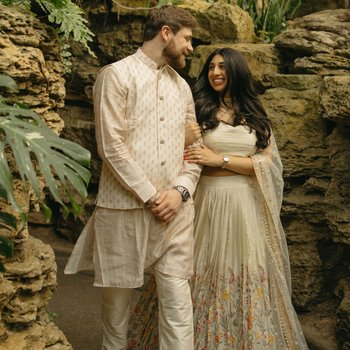
Guests are kindly requested to wear Indian Formal or Western Formal (cocktail attire) for all events. You're welcome to wear a different outfit for each event—Friday night, Saturday morning, and Saturday evening—though it's completely optional! We kindly ask that your Saturday morning attire be modest, as it will be worn in the Gurdwara (temple).
If you'd like to purchase Indian attire, here are some great online options including two rental options:
www.lashkaraa.com
www.mirraw.com
www.utsavfashion.com
www.glamourental.com (rental)
www.borrowthebazaar.com (rental)For women, we suggest wearing a Sharara, Lengha, Salwar Kameez, or Indo-Western outfit.
For men, we suggest wearing a Kurta Pajama, Sherwani, or suit for the traditional events. For the reception, a suit or tuxedo is appropriate.
There are no color restrictions, so feel free to wear what makes you feel beautiful!